
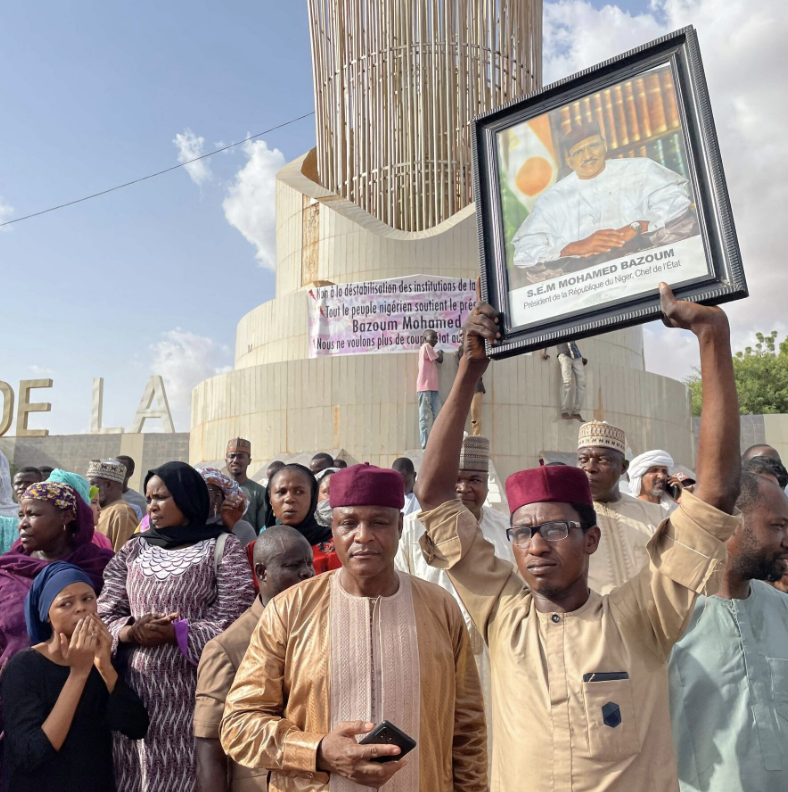
On July 26, 2023, Niger once again fell under military rule. Three years later, the passage of time has neither diminished the gravity of that rupture, nor vindicated the promises made to justify it.
The coup was enabled, in part, by the convergence of several forms of discontent. Some political actors viewed the deepening of democracy, political alternation, and the gradual strengthening of state institutions as threats to interests and patronage networks built in the shadows over several decades. Some young people, legitimately frustrated by unemployment, poverty, and democracy’s failure to deliver tangible improvements at a fast enough pace, saw the rupture as an opportunity to sweep away the existing political order. This rejection of an imperfect system was mistaken for the promise of a better future.
For most Nigeriens, however, the coup initially appeared to be another episode in a painfully familiar history. Since independence, the country had already experienced several military takeovers. Each time, the same promises were made: to restore order, clean up public life, recover national sovereignty, and return power to ‘the people.’
This time, however, the exceptional has become permanent. Three years have revealed the deeper consequences of the constitutional rupture. This includes the weakened rule of law, concentrated power, the vast shrinking of civic and political space, deteriorating living conditions, and the normalization of fear. The language of sovereignty, anti-imperialism, and a distorted form of Pan-Africanism cannot—and never will—be a real substitute for sound public policy, nor can it conceal institutional erosion and the suffering of Nigerien population.
What’s more, Niger’s security situation has deteriorated significantly. Losses suffered by the defense and security forces have risen sharply, while the total number of deaths linked to violence have nearly doubled following the coup. Violence, previously concentrated mainly in Tillabéri, Tahoua, and Diffa, spread to additional administrative areas.
Sovereignty does not mean depriving citizens of their rights. It cannot be measured by the number of journalists silenced, political opponents imprisoned, or citizens forced into exile. A state does not become more sovereign by arbitrarily stripping citizens of their nationality, suppressing dissent, or turning the justice system into a violent instrument of the military government. It merely becomes more authoritarian—and ultimately more fragile.
The most visible symbol of this arbitrary rule remains the detention of President Mohamed Bazoum and his wife, Hadiza. Since July 26, 2023, they have been deprived of their liberty without a fair trial, despite repeated rulings and appeals from international courts and human rights bodies calling for their release.
Other victims of political detention include former Interior Minister Hamadou Adamou Souley and Moussa Tchangari, a respected journalist and prominent human rights defender. His imprisonment in particular illustrates an especially dangerous development: the use of national security and terrorism-related charges to silence a critical voice whose only weapons have ever been speech, analysis, and civic engagement.
Beyond these well-known names are many less visible victims: citizens arrested without adequate judicial safeguards, people subjected to humiliation or mistreatment, journalists intimidated, activists forced into silence, opponents driven into exile, and Nigeriens threatened with the loss of their citizenship because of their opinions and peaceful, lawful dissent.
I write today for them.
I write to express my solidarity with everyone who has been arbitrarily deprived of their liberty. I also write to remind Nigeriens at home, those prevented from returning, and those who have built their lives elsewhere that distance does not release us from our duty of vigilance and solidarity. That duty also belongs to every defender of democracy, justice, and human rights in Africa and throughout the world.
Importantly, we must not allow the passage of time to turn the unacceptable into the ordinary. Neither threats, nor fatigue, nor the gradual normalization of military rule should cause us to forget those who have been unjustly deprived of their freedom.
We must continue to speak their names—like President Bazoum Bazoum and his wife—ask about their welfare, support their families, and appeal to international organizations, democratic governments, African institutions, and all those with the power to exert influence.
We must consistently and unequivocally demand the immediate and unconditional release of Mohamed and Hadiza Bazoum, Hamadou Adamou Souley, Moussa Tchangari, and everyone else who is arbitrarily detained because of their civic engagement or their real or perceived association with the former democratically elected government.
We will not be silent until they are free. An injustice committed against one person is, always and everywhere, a threat to the rights of all.
Mamadou Kiari Liman-Tinguiri is a trained economist and former Ambassador of Niger to the United States. Follow on Twitter: @KLimantinguiri