
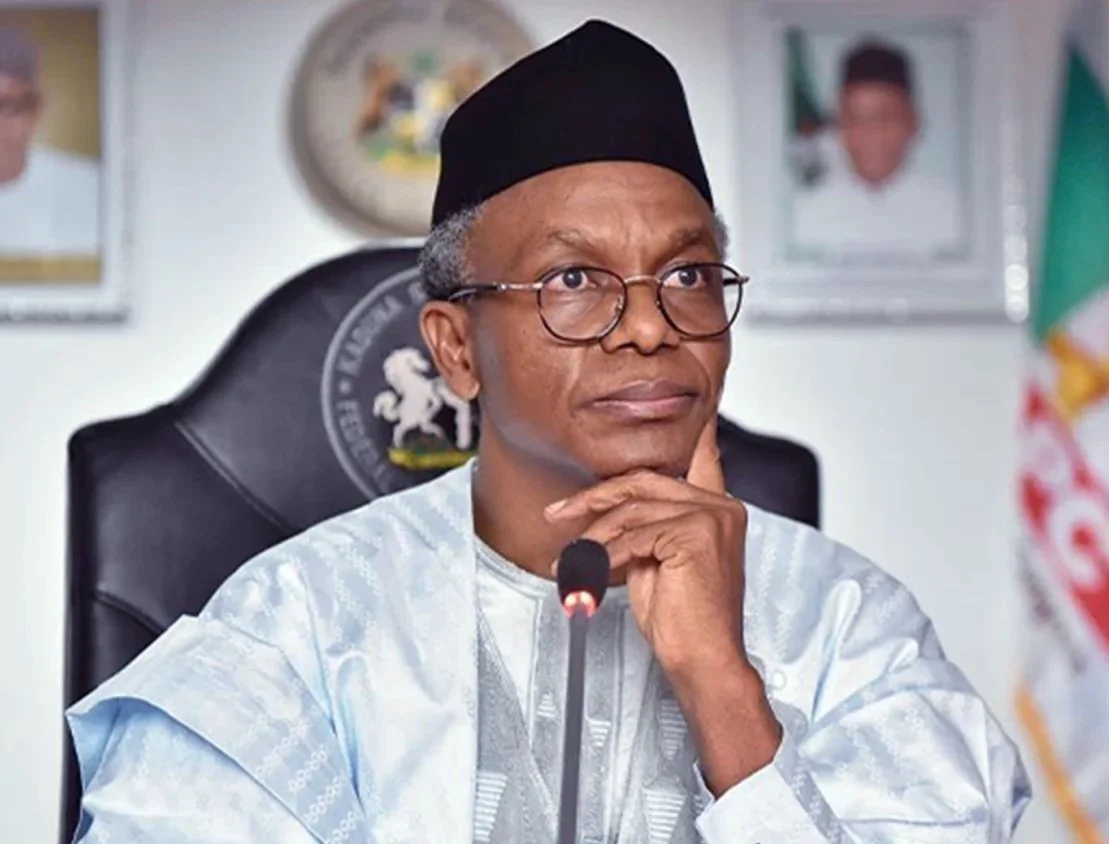
Nigeria is not divided over whether public officials should be held to account. On that point, there is broad consensus: citizens want stolen funds recovered, abuse of office punished, and democratic institutions strong enough to safeguard the rule of law. What is in dispute, however, is something more troubling: whether accountability is being pursued fairly, consistently, and without political motive.
That distinction is the heart of the controversy surrounding former Kaduna State governor Mallam Nasir El-Rufai. His case has revived a national debate not simply about selective justice, but about something larger and more corrosive: the growing use of legal processes, prosecutions, and security institutions as political weapons. In other words, what many observers now describe as ‘lawfare.’
The central question is not whether investigations should occur. In a democracy, they should. It is whether state institutions are acting with neutrality or being drawn into a pattern in which the law is used against inconvenient actors while others remain untouched. Once citizens begin to suspect that legality is being deployed selectively rather than impartially, democratic confidence starts to fray.
No serious observer is arguing that former governors should be above the law. If evidence exists, scrutiny is necessary. But critics are entitled to ask why accountability appears most forceful when it falls on a politically estranged target. Those questions go to the heart of public confidence in Nigerian institutions. Justice must not only be done; it must be seen to be done fairly.
That is why El-Rufai’s case matters beyond the man himself. It is not an isolated episode. It fits a broader and increasingly worrying trend in Nigeria in which courts, prosecutions, and coercive state institutions are perceived to be used to weaken rivals, pressure dissenters, and narrow the space for genuine political competition.
El-Rufai is no ordinary political figure. He remains nationally consequential, especially in Northern politics, which is precisely why his case has become a symbol of a larger anxiety about how power is being exercised. The deterioration in his relationship with the current administration has only intensified the perception that each legal development is politically charged, whether that perception is fully justified or not.
That anxiety becomes harder to dismiss when detention itself begins to look like part of the message. El-Rufai has now been held for more than 100 days—102 days, according to current reporting. Whatever one thinks of him politically, prolonged detention of this kind deepens concerns about due process and proportionality. It is one of the clearest signs of lawfare: when legal process ceases to look merely judicial and begins to appear performative and politically expedient.
The cost of that pattern is considerable. Internationally, politically charged investigations weaken confidence in Nigerian institutions. But the deeper danger is domestic. Once citizens come to believe that prosecutions are selective and the courts can be used to shape political outcomes, democracy begins to erode long before election day. Elections may still be held, parties may still campaign, and ballots may still be cast, but genuine competition is steadily narrowed behind the scenes.
None of this means that anti-corruption bodies or security agencies should shrink from investigating powerful people. The opposite is true. The strength of a democracy lies in its ability to do so without fear or favour. But that credibility collapses when the public sees selectivity rather than principle. The issue is not whether El-Rufai should face scrutiny if evidence exists; it is whether his case forms part of a broader pattern in which the law is applied unevenly and justice becomes a proxy for political warfare.
President Bola Ahmed Tinubu therefore faces a real test of statesmanship. In politics, perception matters almost as much as procedure. At a moment of economic hardship, insecurity, and deep public cynicism, Nigeria can ill afford further damage to the credibility of its justice system. If 2027 is to be seen as a genuinely competitive election rather than a managed outcome, the country must reject lawfare in all its forms and restore public confidence that its institutions serve the constitution, not transient political interests.
What Nigerians are demanding is not immunity for El-Rufai or for any other high-profile figure. They are demanding equal justice, institutional neutrality, due process, and a democratic order in which accountability serves the public interest rather than political convenience. El-Rufai’s case matters precisely because it has come to symbolise a broader, more troubling trajectory in the country.
If Nigeria is to remain a genuine constitutional democracy, it must resist the normalization of lawfare before selective justice hardens into political method.
Mohammed Salihu Shaba is a Nigerian businessman, entrepreneur, and political strategist committed to advancing innovation and transformative leadership across Africa.
Disclaimer: The views expressed in this publication do not necessarily reflect the views of Vanguard Africa, the Vanguard Africa Foundation, or its staff.