
Mr. President,
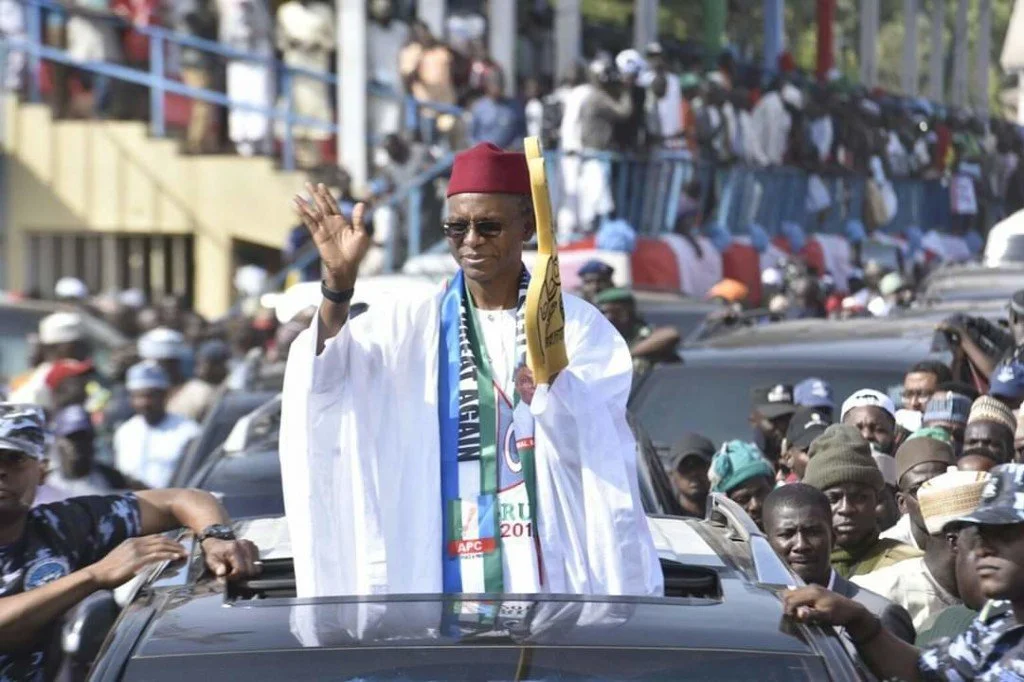
When you assumed office in May 2023, millions of Nigerians—and many more abroad—believed in the promise of renewed hope: a country where merit would triumph over mediocrity, competence would be rewarded, and those who laboured for democracy would not be forgotten. That hope is now being tested by what many Nigerians see as political persecution and the weaponization of state institutions against former Kaduna State Governor, Mallam Nasir El-Rufai.
We write not as your enemies or opponents, but as fellow patriots who believe that justice, due process, and political restraint must remain the foundation of our republic. The world is watching. And Nigerians are rightly asking whether state power is being wielded to settle a political score.
THE BACKGROUND TO THIS MOMENT
This persecution did not ensue in a vacuum. The controversy surrounding Mallam El-Rufai’s ministerial nomination raised expectations that his experience and record would be valued. When he spoke independently and refused to play the role of a political subordinate, the machinery of the state turned against him.
This is not the posture of democratic governance. It looks like personal vengeance dressed in the language of justice.
A strong leader does not fear dissent. A strong leader welcomes debate, tolerates criticism, and understands that democracy is strengthened by plurality and independent voices.
THE WORLD SEES WHAT YOU ARE DOING
Mr. President, the international community is not blind. The bail conditions imposed on Mallam Nasir El-Rufai appear less designed to secure justice than to prolong his detention. When conditions are so onerous that they become practically impossible to satisfy, the process itself begins to look punitive, and public confidence in the judiciary is weakened. This concern has been echoed in recent commentary warning that accountability in Nigeria risks becoming lawfare.
Nigerians understand the difference between accountability and selective prosecution. They know that the fight against corruption must be consistent, transparent, and grounded in law. If it is perceived as a tool for silencing rivals, it ceases to inspire confidence and instead deepens cynicism and democratic apathy.
THE PEOPLE HAVE STOPPED BELIEVING
There was a time when some Nigerians believed this detention was about justice. They desperately wanted to believe that our institutions were working, and that no one was above the law. But that confidence has faded as the case has come to be viewed increasingly as the persecution of a political opponent.
Mallam Nasir El-Rufai served this nation with courage and left a visible record in Kaduna State through reforms, infrastructure, investment, and public-sector discipline. Yet he is now behind bars not because the prosecution has convincingly established guilt, but because many believe he crossed a political line: speaking independently, refusing political submission, and challenging executive power.
The Nigerian people see the contradiction. Those close to power appear shielded, while those who dissent are vigorously pursued. Such selective justice undermines both the anti-corruption cause and the legitimacy of Nigerian government itself.
YOUR LASTING LEGACY
Mr. President, we ask you to pause and reflect. Is this the legacy you want to leave: that your administration will be remembered not for building prosperity and unity, but for destroying a committed democrat and reformer whose public record is perhaps unmatched in recent Nigerian history?
Great leaders are remembered for magnanimity, restraint, and the institutions they strengthen. They are not remembered kindly for vengeance or for using power to unfairly diminish their opponents.
THE COST TO OUR DEMOCRACY
This damage will indeed extend far beyond one man’s detention. Each day El-Rufai remains incarcerated sends a warning to Nigerians who wish to speak truth to power: that dissent can be dangerous, principle can be costly, and silence may be safer than principle and conscience.
Our judiciary must not be seen as an instrument of the executive, and our law enforcement agencies must not be perceived as enforcers of a political agenda. Civil society voices, including former African heads of state, have likewise condemned due process violations and warned against the dangers of lawfare in our country. To be sure, democracy is weakened when institutions sworn to protect all citizens appear to serve the interests of a mere few.
THE IMPLICATIONS IN NIGERIA’S NORTH
Mr. President, you cannot ignore the growing discontent in the North. Mallam El-Rufai is seen by many as a symbol of competence and progress in a region too often neglected and marginalized. His detention has therefore resonated far beyond party or regional politics.
You have spoken of national unity, but unity cannot thrive where a region feels targeted or where its leaders believe independence will be punished. The perception of selective persecution breeds resentment and weakens the bonds that must hold the country together.
ENOUGH IS ENOUGH
Mr. President, we say to you with all the respect that your office deserves but with all the urgency that the moment demands: Enough.
Release Mallam Nasir El-Rufai, or at minimum ensure that his case proceeds under fair, fully transparent, and reasonable conditions.
You can restore public confidence in the impartiality of government. Show Nigerians—and the world, including our major development partners—that the law is a shield for all, not a weapon against some.
History is recording this moment in time. Nigerians are watching to see whether their president will be remembered as a man of justice or vengeance, a builder or destroyer, a unifier or divider.
YOUR CROSSROADS
You stand at a crossroads, Mr. President. The choice before you will define not only your presidency, but your place in world history.
Do what is right. Nigeria deserves better than fear, bitterness, and political vendetta. The strength of a democracy is measured by how it treats dissenters, not by how easily it overwhelms them.
Do what is right before public faith is lost, before divisions deepen further, and before your administration becomes associated less with hope and progress than with persecution and injustice.
We await your action. Despite our struggles, we still firmly believe in a Nigeria where no one is above the law and where no one is beneath its protection; a Nigeria where justice is not sacrificed to political vendetta. Until then, we will not be silent. We will not be intimidated. We will not abandon Mallam Nasir El-Rufai, nor the Nigeria he has spent his entire life trying to build.
Respectfully,
The Leadership of the El-Rufai Support Group Association