
Nigerians are being told a comforting story: the economy is expanding. But millions of Nigerians are living a harsher truth: life is getting harder. World Bank estimates suggest that by 2025, about 63 percent of the population—roughly 140 million people—will be living below the poverty line, up from 56 percent in 2023. When poverty rises this fast, growth is not a success story; it is a major warning sign.
GDP has hovered around 3.8 to 4.1 percent in recent years, yet rapid population growth has canceled out most per-capita gains. Inflation may be easing from 2024 peaks, but the damage is done—and food prices still punish the poorest. For many households, “reform” has meant smaller meals, longer commutes, and fewer options for their families.
A failure of inclusive growth
The problem lies not in the absence of growth, but in its character. Nigeria’s economy is increasingly powered by services and capital-intensive sectors that generate wealth without creating employment. Agriculture, which still employs the majority of the poor, remains chronically underproductive and underfunded. The result is a two-speed economy: one track for the connected few and another for the struggling many.
Rising costs of food, transport, and energy have eroded purchasing power. For millions, “growth” is an abstract concept that never reaches the dinner table.
Demographic time bomb
Nigeria’s youthful population—its greatest potential asset—is rapidly turning into a liability. Each year, millions more young people enter a labor market ill-equipped to absorb them. Underemployment is rampant, and the social contract is fraying. This is no longer merely an economic issue; it is a stability issue.
Idle and marginalized youth, frustrated expectations, and widening inequality breed discontent that can spill into unrest. Sadly, Nigerians already have a lot of experience with this trauma.
Human capital: the silent collapse
The most alarming trend is the erosion of Nigeria’s human capital. Learning outcomes have stagnated for over a decade. Skills gaps are widening. A generation is entering adulthood without the education or health foundations needed to compete globally.
The long-term cost is severe: forgone earnings, lost innovation, and a workforce structurally mismatched to a modern economy. Without urgent investment in education, vocational training, and healthcare, Nigeria cannot hope to sustain even its current modest growth.
Reforms without impact
The Tinubu administration’s reforms—fuel subsidy removal, naira unification, and fiscal tightening—were necessary to correct decades of distortion. They have improved investor sentiment and begun stabilizing macro indicators. Yet for ordinary Nigerians, the benefits remain elusive.
Stabilization has come at the price of immediate hardship, and the transmission mechanisms to household welfare have been weak. The core test of any reform agenda is not whether it balances the books, but whether it lifts living standards and a palpable sense of hope for a better future. So far, it has not.
A structural crisis, not a cyclical one
Too often, Nigeria’s challenges are dismissed as temporary—global shocks, post-pandemic malaise, or the short-term pain of adjustment. That framing is wholly misleading. This is a structural crisis rooted in an exclusionary growth model, a labor market that cannot keep pace with demographics, and a human-capital system failing at scale. At its core, this is a problem of political vision and leadership.
Until these foundations are rebuilt, any recovery will remain a mere facade: shallow and reversible.
The 2027 election
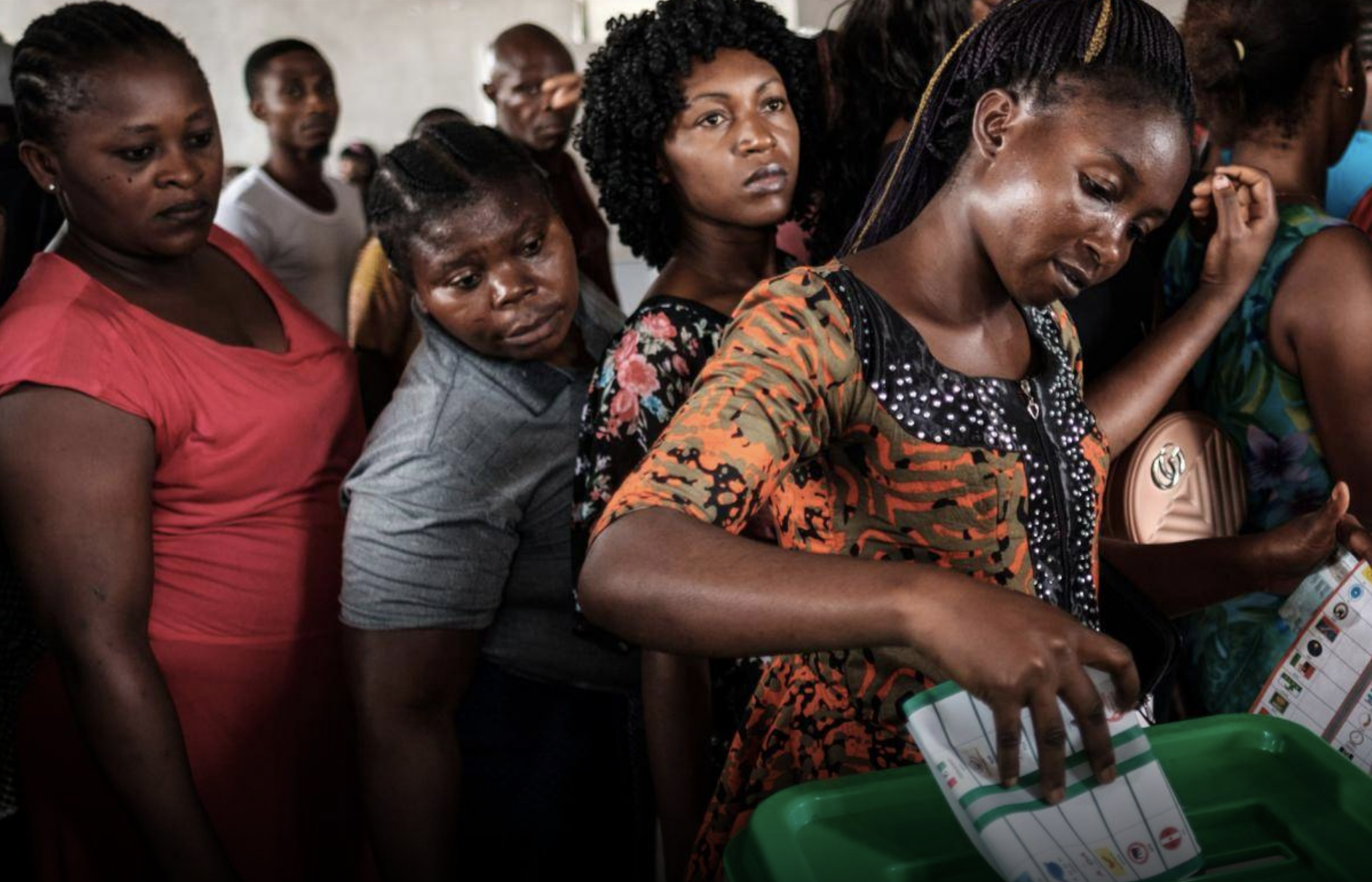
With general elections fast approaching in 2027, these failures carry immediate political weight. Economic hardship—particularly persistent poverty, youth joblessness, and the cost of living—now dominates voter priorities, according to multiple polls. Security and reliable electricity also rank high, but the economy remains the litmus test.
The ruling All Progressives Congress (APC) will be judged not on reform rhetoric or GDP charts, but on whether everyday Nigerians—regardless of political affiliations—feel any sort of relief. A large cohort of young, first-time—or newly frustrated—voters could prove decisive. If the structural disconnect persists, opposition parties—already positioning themselves as champions of the “masses”—stand to gain ground.
Discontent could manifest as lower turnout, protest voting, or heightened social tensions that complicate the electoral environment. In short, 2027 will not be decided by macroeconomic scorecards on their own. The election will be a referendum on whether Nigeria’s growth model finally begins to serve its people.
The path forward
Reversing course in Nigeria demands more than political rhetoric or short-term tinkering. It requires a deliberate pivot to job-intensive growth: massive, targeted investment in agricultural modernization and light manufacturing that can absorb millions.
It demands a human-capital revolution—radical improvements in education quality, skills, and primary healthcare—and a new metric of success: not just fiscal stability or illusory GDP growth, but measurable gains in household welfare and poverty reduction.
These changes will not be easy or quick. But they are non-negotiable.
Nigeria stands at a crossroads. It can cling to a model where growth and poverty rise in tandem—or it can confront the structural rot that has hollowed out its promise. The 2027 elections will offer the first major verdict on which path the nation chooses. In the end, an economy’s true measure is not how fast it grows on paper, but how well it serves the people who live in it. Leaders must act now—at scale and with urgency—to turn reforms into jobs, services, and lower living costs, or risk locking in another generation of avoidable hardship.
Mohammed Salihu Shaba is a Nigerian businessman, entrepreneur, and political strategist committed to advancing innovation and transformative leadership across Africa.
Disclaimer: The views expressed in this publication do not necessarily reflect the views of Vanguard Africa, the Vanguard Africa Foundation, or its staff.