
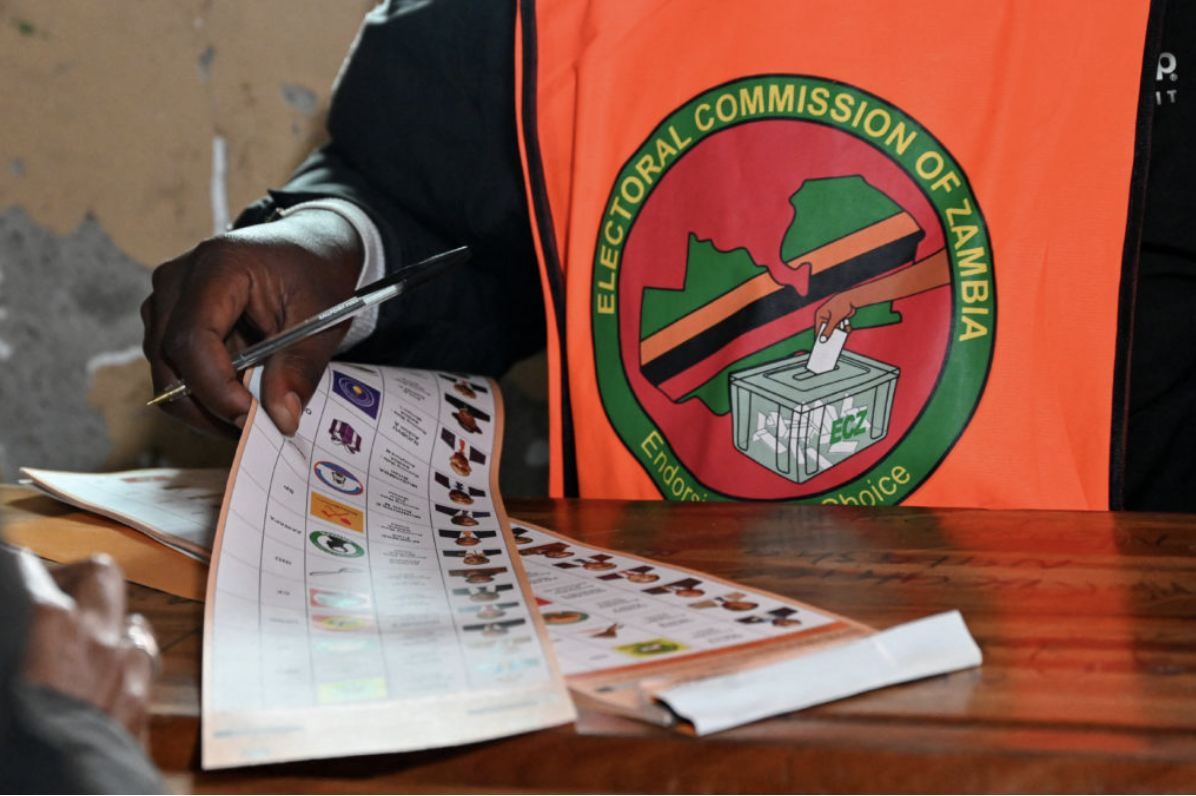
Zambia held its general elections on August 13, 2026. Several analyses have since examined developments surrounding the election and their implications for Zambian democracy. These accounts range from claims that the election reflected the will of the people to accusations of rigging and democratic backsliding. I argue that, beyond simply narrating the developments around the election, these events may also have been shaped by ethno-regional politics. For that reason, Zambia needs to develop a more inclusive model of nation-building.
Following the election, the Electoral Commission of Zambia declared President Hakainde Hichilema the winner with 60.5 percent of the vote, while his main challenger, Brian Mundubile, received 37.9 percent. The outcome was also independently validated by the Christian Churches Monitoring Group (CCMG), the largest and most systematic election observation group in the country, though it projected a narrower lead: 56 percent for Hichilema and 42 percent for Mundubile.
Events surrounding the election have left the country in a state of confusion and uncertainty. A day after the election, Mundubile claimed that he had won. That evening, law enforcement officers raided an opposition base, where they reportedly recovered guns and machetes and arrested nearly a dozen occupants.
The following day, on August 15, military officers raided another property reportedly linked to Mundubile. In the ensuing engagement, they killed senior opposition figure and former minister Mutotwe Kafwaya and reportedly recovered high-grade military weapons. Mundubile and his running mate, Makebi Zulu, sought refuge at the United Nations complex but were ultimately handed over to the police on August 27. Both are now in police custody and have been questioned on suspicion of treason. The state, however, has not yet fully disclosed the activities on which the arrests are based or the nature of the alleged threat. Further, the courts and other government offices were shut down for three days, from August 24 to 26, allegedly for security reasons.
The presidential election itself was intensely contested, as was to be expected. The presidency in Zambia is the most powerful and coveted office. Presidential elections are often treated as a zero-sum contest: the winner gains extensive access to, and control over, the country’s resources, as well as authority over the use of state force. By contrast, losing the presidency means being left out in the cold with little influence. In such a situation, the winner may seek to politically marginalize opponents, while the loser may feel excluded from the outcome and have little incentive to cooperate with the new government. The result is national polarization. The fact that the election was contested by a southerner, Hichilema, and a northerner, Mundubile, also brought identity politics to the fore. Throughout the campaign season, social media was awash with toxic ethno-regional rhetoric.
This is not a coincidence; it lies at the heart of the current design of the Zambian state. Zambia, like many former colonies in Africa, is a colonial construct. At independence, Zambia became a juridical state without its inhabitants necessarily sharing a strong sense of nationhood or unity. The new Zambian leaders therefore faced the challenge of welding the country’s diverse groups into one nation in order to build a viable state. This challenge had constitutional and electoral implications in at least two ways.
First, the process of nation-building was driven from the center by leaders who relied on top-down models. This largely resulted in the creation of a highly centralized unitary state and the accumulation of power in the central government, especially in the presidency. Second, assertions of diversity were viewed negatively and treated as obstacles to nation-building. Diverse identities had either to be obliterated or subordinated to a single national identity. These views later crystallized in the one-party-state constitution of 1973, which effectively outlawed all parties other than the ruling party. Elections, at least at the presidential level, were no longer competitive, and the country appeared to be a cohesive whole on paper.
The return to multiparty politics in 1991, and the competitive nature of that politics, raised the need for a model of nation-building that does not strip people of their multiple identities within the nation. A unitary state, combined with a winner-take-all electoral model, is a recipe for continued ethno-regional polarization. We are seeing this in the country today, and it will continue to encourage identity politics while endangering national cohesion.
A Commission of Inquiry empanelled by President Edgar Lungu after the 2016 general election found that the main driver of political violence was tribal inclination, as voters tended to support parties led by candidates from their own tribe or region. According to the Commission, this explained “the teaming up of people from provinces on the south-western part of the country, on the one hand, and people from the provinces on the north-eastern side of the country, on the other hand,” as well as the fact that “politicians deployed tribal campaigns … to garner votes to benefit their political parties.”
Ethnic identity implicates many other issues of constitutional importance, including the need for an inclusive electoral system; political mobilization and public participation in governance; devolution of power to subnational tiers of government; and the role of patronage and corruption in public affairs. The current approach to nation-building in Zambia, which relies on unitary nationalism and suspicion of diversity, is not sustainable. The August 2026 election showed this once again to be the case. Political polarization is widening, and social distrust is noticeably increasing. This is because the Zambian state, as currently composed, can persist only through a combination of repression and patronage.
The time has certainly come for Zambia—and for Zambians together—to explore a constitutional and electoral model that effectively accommodates diversity and departs from the current winner-take-all electoral system.
Dr. O’Brien Kaaba is a lecturer in the School of Law at the University of Zambia.
Disclaimer: The views expressed in this publication do not necessarily reflect the views of Vanguard Africa, the Vanguard Africa Foundation, or its staff.