
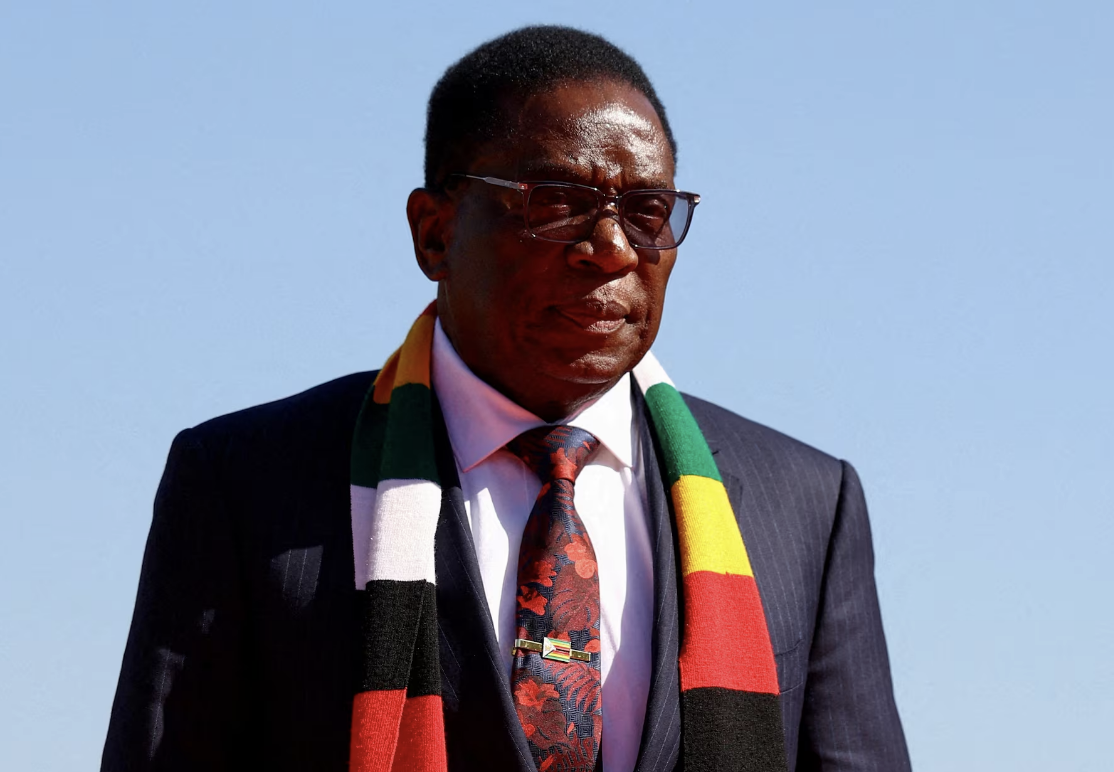
This July, President Emmerson Mnangagwa signed Constitutional Amendment Bill No. 3 (CAB 3) into law, removing presidential term limits and lengthening Zimbabwe’s presidential term to seven years. The effect is not only limited to Mnangagwa’s political future. In fact, it reshapes the entire architecture of power in Zimbabwe.
There is no longer a ‘transition window’ around which the ruling party must plan. Mnangagwa can now seek re-election in 2030 for another seven-year term. ZANU-PF’s Midlands province has since set the process in motion, calling for the party constitution to be aligned with the national constitution by adopting a seven-year electoral cycle.
Supporters presented these changes to the country’s supreme law as a matter of ‘continuity,’ arguing that Mnangagwa needs more time to complete his development projects. Critics, however, say that justification obscures a broader, more concerning consolidation of power.
Why CAB 3 Happened
Political scientist Professor Ricky Mukonza argues that the consequences go deeper. He said Zimbabwe’s long-running governance crisis is likely to worsen as key public institutions charged with safeguarding the country’s democratic system are weakened. “CAB 3 did not just extend a presidency. It aligned all three arms of the state behind a single agenda: power retention,” Mukonza said.
“The appointments of officials in Parliament, in the Senate and in the various arms of the state should not be read outside of that thinking. ZANU-PF has a long history of ensuring that all the three arms of the state are aligned towards the agenda of power retention.”
Mnangagwa’s biographer Eddie Cross described the constitutional change as “totally counterproductive.”
Cross said Mnangagwa had intended to hand over power after two terms and that the subsequent political maneuvering had surprised him. “I don't think that the situation in the country called for it. I think it was the fabrication of elements inside the ruling party who wanted to retain power in the transition that's underway,” he said.
“We're at a time in our history where one generation is making way for another and I think there are people inside the party who fear that if they do not control the transition, their interests will be damaged by a new government and there's lots of examples of that in Africa.”
Cross called the centralization of power under Mnangagwa ‘a mistake’ and a recurring problem in Zimbabwe. He said the same problem had marked the rule of former president Robert Mugabe. “Even in the Rhodesian era Ian Smith held almost total power for 17 years and before him Lord Malvern was prime minister for 35 years, so we have a history of concentration of power in the hands of a few people and for extended period of time…and it's not good.”
A Weakened Legislature
For Mukonza, this concentration of power has produced an executive that can dominate the other two branches of government without political consequence. He said Mnangagwa’s recent appointment of loyalists, such as businesspeople Kudakwashe Tagwirei and Goodwills Masimirembwa to the Senate, was part of an effort to reward those who supported the constitutional changes.
Parliament was designed to check the executive, scrutinize laws and represent competing interests, but that function is now at risk, Mukonza added. “We are now likely to see laws that are in favor of a dominating ruling political clique finding passage in Parliament with minimum scrutiny.”
Decisions “that are supposed to [be made] thorough scrutiny of the legislature are going to pass easily in that important space where they are supposed to be refined for the public good. Now, we are going to see sectoral political interests being prioritized instead.”
A Compromised Judiciary
The judiciary faces the same pressure as other state institutions. “You look at the appointments in the judiciary,” Mukonza said. “When matters of critical national importance are brought to the judiciary, the independence that is expected is not going to be there. And judgments that are going to be given by this judiciary are also going to serve the interests of the ruling class.”
The principle at stake is the separation of powers, Mukonza said—the idea that the executive, legislature and judiciary must check one another to prevent abuse.
Mukonza dismissed the argument that CAB 3 is about ‘continuity of developmental projects’ as “lazy thinking,” because national projects are not personal.
“Personalizing public projects is just a sure way of promoting what political scientists call big manism. It only works in promoting big manism and obviously drives us towards the road to dictatorship and authoritarianism.”
What Happens Next?
Despite the extension, Cross said he does not expect Mnangagwa to remain in power for the full seven-year term. “I suspect that a deal has been done between very powerful elements in the country. I think there will be a transition of power in due course, maybe even in 2028,” Cross said. “But I don't expect there to be any violence or any radical political action involved in that process. I think the process will be orderly and managed.”
2027 as a Turning Point
Political commentator Rashweat Mukundu described the current moment as a period of political realignment and said 2027 will reveal the direction Zimbabwe takes after the constitutional amendment. “For me, the year 2027 will be more telling in terms of where Zimbabwe is going post the constitutional amendment.”
Mukundu said a stronger executive could accelerate Zimbabwe’s development if the president has a clear vision, but that such power comes at the cost of accountability and transparency. He said civil society and business will have to adjust to engaging a more powerful presidency.
“The question is, will the zone of engagement shift from what has dominated Zimbabwe in the past, which is politics, to more developmental issues?” Mukundu said. “I think this is the main argument by ZANU-PF and its leadership that Zimbabwe has been too preoccupied with political debates, and we now need to move to the more developmental issues and questions.”
The CAB 3 amendment has therefore settled one question—how long Mnangagwa may remain in office—while intensifying another: whether Zimbabwe’s institutions can still restrain an increasingly powerful presidency intent on operating with impunity.
Clemence Manyukwe is an independent Zimbabwean journalist. Follow him on Twitter: @charindapanze01
Disclaimer: The views expressed in this publication do not necessarily reflect the views of Vanguard Africa, the Vanguard Africa Foundation, or its staff.